Liz Wykys
Wolf HallLiz Wykys is Thomas Cromwell’s wife and the mother of his children, a practical, observant woman whose work and judgment give shape to the household he returns to between political missions. She recognizes the danger in the king’s rumored marital plans before Thomas fully grasps its reach, and her sudden death during the sweating sickness turns domestic life into an absence he cannot explain or repair.
Identity and Household
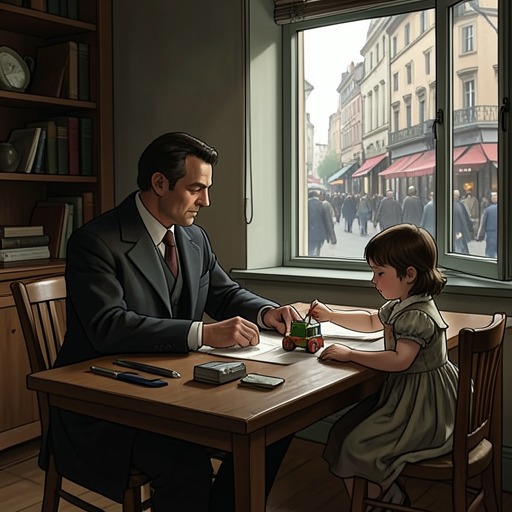
When Thomas returns to Austin Friars from the north, Liz is still awake. She comes out carrying Bella, their little dog, and asks the questions that organize his return: whether he has eaten, whether he is tired, and whether he wants a drink. Their exchange is familiar and teasing. Thomas complains that Gregory’s letter greets the family as though there were only one of them; Liz gently mocks the dutifulness of its Latin and listens as Thomas recounts his son’s news.
Liz is affectionate without being sentimental. Thomas tells her she is sweeter to look at than the cardinal, and she observes that this is a very small compliment. The scene’s domestic ease is made concrete by the newly painted panelling, the subdued green and golden light, the wax tapers, and the pearls and garnets Thomas gave her at New Year. Bella nibbles his fingertips while Liz settles to her own work, placing the marriage in the physical routines and objects of a shared home.
Her work is skilled and economically active. She makes silk tags for document seals and fine net cauls for ladies at court, keeps two girl apprentices in the house, and follows fashion. She complains about middlemen and the cost of thread. Thomas imagines taking her to Genoa to meet suppliers, but Liz knows how difficult it will be to get away from Wolsey’s service. Her business is not a decorative detail: she understands trade, prices, and the risks hidden in a transaction.
Work, Judgment, and Political Awareness
Liz brings Thomas news from a friend in Cheapside, the wife of a master jeweller. A large emerald has been ordered for a woman’s ring, but the stone shattered while being cut in Antwerp. The cutter blames a hidden flaw; the importer insists he could not have known of it, leaving the parties to pursue damages. Liz follows the dispute closely and shows Thomas the emerald, which is as large as her thumbnail. She and her contacts suspect that the king is the buyer: no one else in London would be seeking a stone of that size, and it is not intended for the queen.
The broken emerald is both an item of commercial gossip and a clue to court politics. Thomas wonders whether and when a ring will appear, while Wolsey has been predicting that the king will take his prospective woman to bed, tire of her, and pension her off. Liz does not accept the political matter as merely a question of the king, the cardinal, or Spain. She asks Thomas who the woman is and tells him that if the king attempts what the city is hearing, half the people in the world will oppose it. When he waits for her to explain, she names women across England: those with daughters but no sons, those who have lost children or the hope of having them, and women who are forty. Her insight makes the consequences of the king’s private desire collective and personal, extending beyond the diplomatic opposition Thomas and Wolsey have considered.
She combines that political understanding with a sharp perception of her husband. After Thomas returns from Yorkshire, she asks who the lady is, teasing him as though his absence might conceal an affair. When he is confused, she clarifies that she means the woman associated with the emerald. The misunderstanding gives way to the real question: what is happening at court, and what might it mean for women whose lives are bound to marriage and childbearing?
Marriage and Family
Thomas first came to Liz’s family through business with her father, Wykys, a successful wool trader from Putney. He helped revive the failing business by examining the accounts and clerks, dismissing a dubious chief clerk, and training a timid junior whom others had taken for stupid. After the business returned to profit, Wykys called Lizzie downstairs and asked whether Thomas would do as a new husband. Lizzie assessed him wryly, then asked Thomas whether he wanted a wife.
Their marriage began with clear practical interests as well as attraction. Liz wanted children; Thomas wanted a wife with city contacts and money behind her. They married within weeks, and Gregory was born within the year. When Thomas held the newborn, he resolved to be as tender to him as his own father had not been. Liz’s place in the family is therefore bound to the future Thomas hopes to make for the next generation, even as her later warning forces him to consider the many women for whom the absence of a son carries political and personal consequences.
Thomas and Liz’s closeness appears in small exchanges rather than declarations. She worries about Gregory’s education and future, while Thomas defends the boy as still growing and remembers how little sleep his own unsettled childhood and early travels allowed him. At home, Liz reads while working, and her prayer book bears the name Elizabeth Williams, written by her first husband. Thomas knows the man and admits to jealousy, though the old name remains part of the book’s history. He offers Liz Tyndale’s New Testament and a key to the locked chest, urging her to read it in English for herself; she tells him to read it aloud if he is so keen. The exchange shows both his evangelical commitment and the difference between his urgency and her own habits of belief and work.
Death and Aftermath
Liz dies during the sweating sickness while Thomas is away. He has spent the evening with religious and foreign contacts; when he reaches home at dusk, torches are burning and the household faces turn from him. Mercy’s grief-stricken apology first makes him fear that Gregory is dead. He understands that Liz is gone when he asks where she is and receives no answer. The scene turns his delayed return into a permanent absence: he had not been there when she needed him, although she had sent Rafe to find him.
Mercy recounts Liz’s final hours piece by piece. At ten in the morning, in the middle of the day’s work, Liz said that she was weary and dizzy. She pushed food away, then lay down at midday, shivering despite her burning skin. She asked whether Rafe was in the house and told him to find Thomas. At half past twelve she asked Thomas to look after the children. At one she called for a priest; at two she confessed that she had once picked up a snake in Italy, received absolution, and was left as the priest hurried away, afraid of contagion. She declined at three and died at four. Mercy’s painstaking account becomes something she is handing over to Thomas, moment by moment, because he was not there to witness it himself.
Thomas attends first to the children. Anne is silent and stone-faced, holding Grace’s hand; Grace, who rarely sees her father, trusts him enough to fall asleep against his shoulder. Anne says that she too may feel cold when Thomas explains that she must go to bed beside her little sister. He stays with the girls until Anne’s tears stop and her hand slackens in his. Only then does he go to see Liz. Herbs burn against contagion, candles stand at her head and feet, and linen binds her jaw; the familiar bedroom has become a room of death.
The sickness imposes its own rules on grief. Liz must be buried quickly, and Thomas cannot summon Gregory or gather the family. A bunch of straw must hang outside the infected household’s door, and its inhabitants must restrict their movements for forty days. Mercy suggests that they might call the illness an ordinary fever rather than admit to the sweat, since keeping everyone at home would bring London to a standstill. Thomas refuses to evade the rule: Wolsey made it, and he will not disregard it. His insistence on quarantine makes private loss part of the epidemic’s public discipline.
Memory and Significance
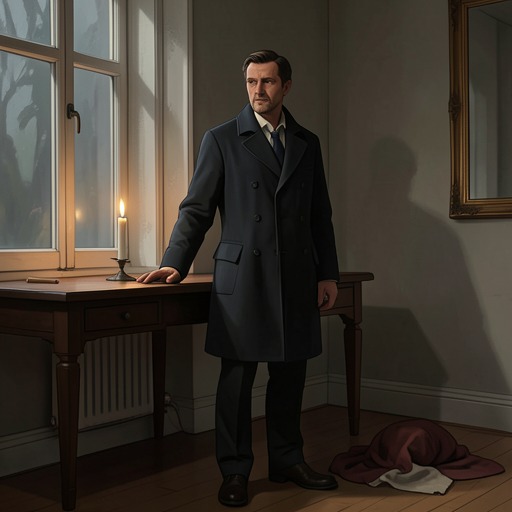
Thomas wonders whether Liz would have wanted burial with her first husband because he came to her later. He walks away rather than make the usual arrangements for mourning clothes, beadsmen, and candles. Later, he wants to recover the sight of her white cap and imagine her waiting at the door to ask when he is coming home. Instead, memory gives him an image of her alone, with wasteland behind her and a blue-tinged light. He recalls their wedding night and her wary gesture of hugging her elbows; the next day she had smiled and said, “That's all right then.” The recollection reduces a marriage to a simple reassurance, but the years of shared work and family life give that sentence its weight.
Liz’s importance to the story lies in the way her domestic knowledge contests the narrower calculations of court politics. She sees that the king’s marital ambitions are not only a contest among rulers and counsellors: they touch women’s hopes, losses, and prospects of motherhood. Her own life joins commerce, family, and political consequence, from the fragile emerald being cut in Antwerp to the children she leaves behind. Thomas survives her, but the household’s practical rhythms, affectionate corrections, and shared future do not. Her death is not made intelligible by his knowledge of scripture; he can know the New Testament by heart and still find no text that explains this loss.